Newsroom
Rwanda and Partners Reaffirm Commitment to Refugee Self-Reliance Amid Global Aid Cuts
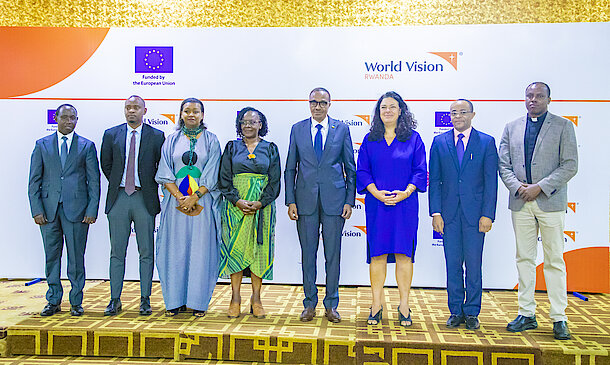
Hon. Minister Maj Gen (Rtd) Albert Murasira, together with Belen Calvo Uyarra, the Ambassador of the European Union to Rwanda, officially launched the Dukore Twigire Project (Work for Self-Reliance). Funded by the EU and implemented by World Vision Rwanda in partnership with Caritas Rwanda and RODI Rwanda, the initiative seeks to empower refugees and host communities with pathways to sustainable livelihoods.
Over the next three years, the project will support 2,133 households; 70% refugees from Kigeme, Mugombwa, Nyabiheke, and Kiziba camps, and 30% host families from surrounding communities, to graduate from aid dependence to self-reliance. This effort directly contributes to Rwanda’s Refugee Sustainable Graduation Strategy 2026–2030.
In his remarks, Hon. Minister Murasira emphasized the project’s broader significance: “The Dukore Twigire Project is an important step in strengthening resilience and promoting self-reliance of forcibly displaced populations and their host communities. It demonstrates our shared commitment to move beyond aid dependence towards dignity and lasting solutions.”
Ambassador Belén Calvo Uyarra reaffirmed the EU’s commitment: “We remain dedicated to working with Rwanda, World Vision, and partners to enhance refugee protection and self-reliance. I encourage all implementing partners to put their full efforts into initiatives that truly empower refugees to thrive and contribute to society.”
Speaking on behalf of refugees, MANIRAGABA Jean Bosco, President of the Nyabiheke Camp Refugee Committee, welcomed the project with gratitude: “We appreciate this initiative, which comes at a time when global humanitarian aid is declining. Refugees are ready to play their part in ensuring the success of this project and in building a better future for our communities.”
At a time when humanitarian funding is under severe pressure worldwide, Rwanda and its partners continue to reaffirm their commitment to advancing the socio-economic inclusion and self-reliance of refugees. By promoting dignity, resilience, and sustainable livelihoods, these efforts reflect a shared determination to move beyond aid dependency and foster stronger, more self-reliant communities, benefiting both displaced populations and their hosts.
Rwanda and Partners Reaffirm Commitment to Refugee Self-Reliance Amid Global Aid Cuts
Hon. Minister Maj Gen (Rtd) Albert Murasira, together with Belen Calvo Uyarra, the Ambassador of the European Union to Rwanda, officially launched the Dukore Twigire Project (Work for Self-Reliance). Funded by the EU and implemented by World Vision Rwanda in partnership with Caritas Rwanda and RODI Rwanda, the initiative seeks to empower refugees and host communities with pathways to sustainable livelihoods.
Over the next three years, the project will support 2,133 households; 70% refugees from Kigeme, Mugombwa, Nyabiheke, and Kiziba camps, and 30% host families from surrounding communities, to graduate from aid dependence to self-reliance. This effort directly contributes to Rwanda’s Refugee Sustainable Graduation Strategy 2026–2030.
In his remarks, Hon. Minister Murasira emphasized the project’s broader significance: “The Dukore Twigire Project is an important step in strengthening resilience and promoting self-reliance of forcibly displaced populations and their host communities. It demonstrates our shared commitment to move beyond aid dependence towards dignity and lasting solutions.”
Ambassador Belén Calvo Uyarra reaffirmed the EU’s commitment: “We remain dedicated to working with Rwanda, World Vision, and partners to enhance refugee protection and self-reliance. I encourage all implementing partners to put their full efforts into initiatives that truly empower refugees to thrive and contribute to society.”
Speaking on behalf of refugees, MANIRAGABA Jean Bosco, President of the Nyabiheke Camp Refugee Committee, welcomed the project with gratitude: “We appreciate this initiative, which comes at a time when global humanitarian aid is declining. Refugees are ready to play their part in ensuring the success of this project and in building a better future for our communities.”
At a time when humanitarian funding is under severe pressure worldwide, Rwanda and its partners continue to reaffirm their commitment to advancing the socio-economic inclusion and self-reliance of refugees. By promoting dignity, resilience, and sustainable livelihoods, these efforts reflect a shared determination to move beyond aid dependency and foster stronger, more self-reliant communities, benefiting both displaced populations and their hosts.