Newsroom
Rwanda Begins Handover of New Homes to Disaster-Affected Families

Rwanda has continued to restore safe and resilient housing for families affected by disasters, with thousands of homes constructed or rehabilitated as part of the country’s ongoing disaster recovery efforts.
The latest phase of the intervention was marked by the handover of newly constructed homes to disaster-affected families in Burera District on 2 October, following a similar handover in Ngororero District the previous day.
Minister of Emergency Management, Maj. Gen. (Rtd) Albert Murasira, together with district authorities, handed over the homes to beneficiary families and urged them to take good care of the houses and use them as a foundation for rebuilding their livelihoods and becoming self-reliant.
In Burera District, 597 homes were constructed for families affected by disasters, while 255 homes were constructed in Ngororero District.
The wider housing intervention covers families affected by disasters in Ngororero, Muhanga, Rutsiro, Nyabihu, Karongi, Burera and Rubavu districts, with 3,059 newly constructed homes being handed over to families whose houses were destroyed by disasters.

In total, 5,096 homes have been constructed or rehabilitated, providing safe housing for more than 25,480 people affected by disasters.
Minister Murasira said the intervention responds to the Government’s commitment to support families whose homes were destroyed by disasters, particularly following the devastating floods and landslides that affected communities in 2023.
“Rubavu was among the areas severely affected by disasters. When the President visited the area, he promised the affected families that they would be provided with new homes. That intervention started, and today we are completing the process and officially handing over the houses. The beneficiaries have already started moving in, and we are also assessing the quality of the construction,” Minister Murasira said.
He added that the Government’s support was intended to help affected families move from temporary assistance towards sustainable recovery.
“A citizen faced difficulties and the country had a responsibility to support them. That is why they have been provided with strong houses that can withstand disasters. This is a beginning, not an end. They should use this opportunity to work, improve their livelihoods and become self-reliant. Until these houses were completed, we had been supporting them with rent,” he said.
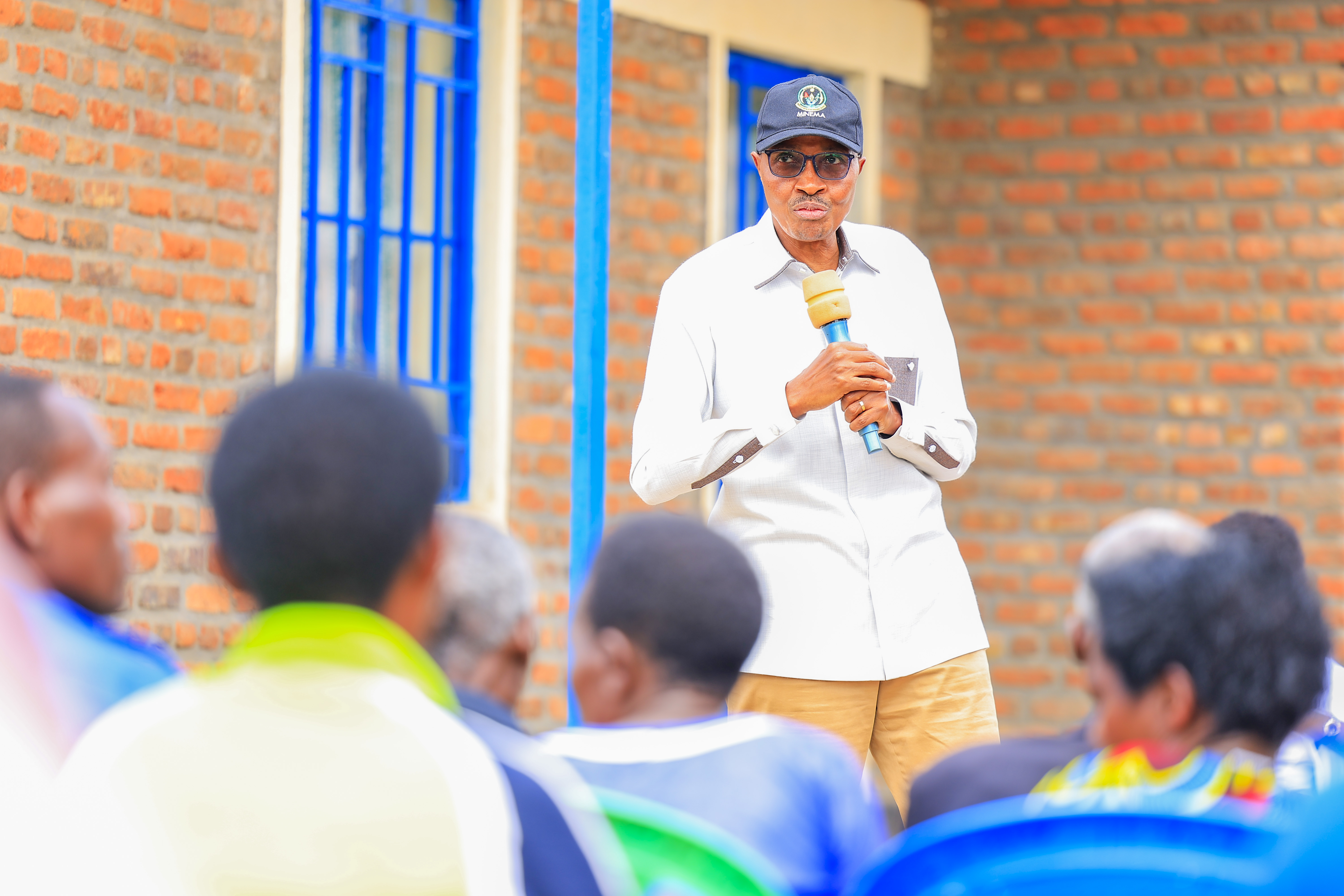
The Minister also called on the beneficiaries to maintain the homes and encouraged the wider population to learn from the intervention by ensuring that houses are constructed in ways that reduce disaster risks.
“These houses should serve as an example to the wider population on building resilient, disaster-safe homes,” he said.
For families who lost their homes, the new houses represent more than physical shelter. They provide an opportunity to rebuild their lives in safer conditions.
Olive Iribagiza, one of the beneficiaries in Ngororero District, said receiving the new home has brought a major change to her family’s life.
“Before receiving this house, my family’s life was very difficult. Whenever it rained, we would leave our beds and spend the night outside because we feared that the house could collapse on us. Now, with this modern house, we can sleep peacefully. We are extremely grateful to President Paul Kagame for thinking of us and supporting us after the disasters. For him, a promise made is a promise fulfilled,” Iribagiza said.

The housing intervention is part of broader recovery and response efforts following disasters that affected communities in Rwanda’s Northern and Western provinces.
Across the wider recovery programme, 2,763 houses have been reconstructed while 3,522 have been constructed from scratch, supporting more than 25,000 people affected by disasters across Burera, Musanze, Nyabihu, Ngororero, Muhanga, Karongi, Rutsiro and Rubavu districts. More than 5,000 houses have been built through recovery and response interventions since 2023.
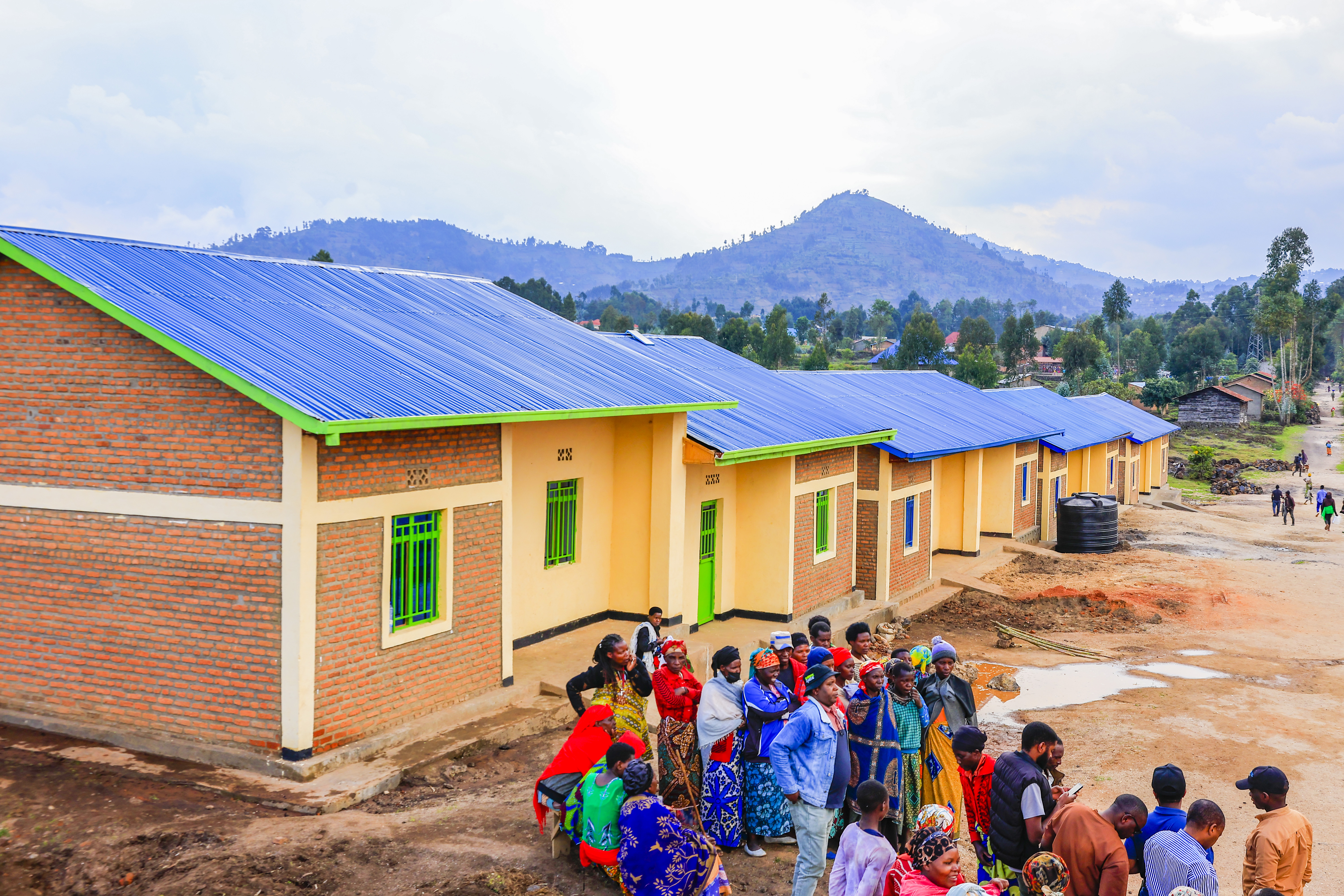
Minister Murasira said the newly provided homes should mark a transition towards a more secure and self-reliant future for the beneficiaries.
“This is a foundation for them to begin a new life after having relied on government rent support to survive,” he said.
The housing support is implemented under the Contingency Emergency Response Component (CERC), a World Bank-funded project aimed at responding to the impacts of the floods and landslides that affected Rwanda’s Northern and Western provinces on 2–3 May 2023.
The intervention forms part of Rwanda’s broader disaster recovery approach, which combines immediate assistance to affected households with measures aimed at restoring livelihoods, strengthening resilience and reducing future disaster risks.
Rwanda Begins Handover of New Homes to Disaster-Affected Families
Rwanda has continued to restore safe and resilient housing for families affected by disasters, with thousands of homes constructed or rehabilitated as part of the country’s ongoing disaster recovery efforts.
The latest phase of the intervention was marked by the handover of newly constructed homes to disaster-affected families in Burera District on 2 October, following a similar handover in Ngororero District the previous day.
Minister of Emergency Management, Maj. Gen. (Rtd) Albert Murasira, together with district authorities, handed over the homes to beneficiary families and urged them to take good care of the houses and use them as a foundation for rebuilding their livelihoods and becoming self-reliant.
In Burera District, 597 homes were constructed for families affected by disasters, while 255 homes were constructed in Ngororero District.
The wider housing intervention covers families affected by disasters in Ngororero, Muhanga, Rutsiro, Nyabihu, Karongi, Burera and Rubavu districts, with 3,059 newly constructed homes being handed over to families whose houses were destroyed by disasters.
In total, 5,096 homes have been constructed or rehabilitated, providing safe housing for more than 25,480 people affected by disasters.
Minister Murasira said the intervention responds to the Government’s commitment to support families whose homes were destroyed by disasters, particularly following the devastating floods and landslides that affected communities in 2023.
“Rubavu was among the areas severely affected by disasters. When the President visited the area, he promised the affected families that they would be provided with new homes. That intervention started, and today we are completing the process and officially handing over the houses. The beneficiaries have already started moving in, and we are also assessing the quality of the construction,” Minister Murasira said.
He added that the Government’s support was intended to help affected families move from temporary assistance towards sustainable recovery.
“A citizen faced difficulties and the country had a responsibility to support them. That is why they have been provided with strong houses that can withstand disasters. This is a beginning, not an end. They should use this opportunity to work, improve their livelihoods and become self-reliant. Until these houses were completed, we had been supporting them with rent,” he said.
The Minister also called on the beneficiaries to maintain the homes and encouraged the wider population to learn from the intervention by ensuring that houses are constructed in ways that reduce disaster risks.
“These houses should serve as an example to the wider population on building resilient, disaster-safe homes,” he said.
For families who lost their homes, the new houses represent more than physical shelter. They provide an opportunity to rebuild their lives in safer conditions.
Olive Iribagiza, one of the beneficiaries in Ngororero District, said receiving the new home has brought a major change to her family’s life.
“Before receiving this house, my family’s life was very difficult. Whenever it rained, we would leave our beds and spend the night outside because we feared that the house could collapse on us. Now, with this modern house, we can sleep peacefully. We are extremely grateful to President Paul Kagame for thinking of us and supporting us after the disasters. For him, a promise made is a promise fulfilled,” Iribagiza said.
The housing intervention is part of broader recovery and response efforts following disasters that affected communities in Rwanda’s Northern and Western provinces.
Across the wider recovery programme, 2,763 houses have been reconstructed while 3,522 have been constructed from scratch, supporting more than 25,000 people affected by disasters across Burera, Musanze, Nyabihu, Ngororero, Muhanga, Karongi, Rutsiro and Rubavu districts. More than 5,000 houses have been built through recovery and response interventions since 2023.
Minister Murasira said the newly provided homes should mark a transition towards a more secure and self-reliant future for the beneficiaries.
“This is a foundation for them to begin a new life after having relied on government rent support to survive,” he said.
The housing support is implemented under the Contingency Emergency Response Component (CERC), a World Bank-funded project aimed at responding to the impacts of the floods and landslides that affected Rwanda’s Northern and Western provinces on 2–3 May 2023.
The intervention forms part of Rwanda’s broader disaster recovery approach, which combines immediate assistance to affected households with measures aimed at restoring livelihoods, strengthening resilience and reducing future disaster risks.