Newsroom
Rwanda Calls to “Fund Resilience, Not Disasters” at National DRR Stakeholders’ Dialogue
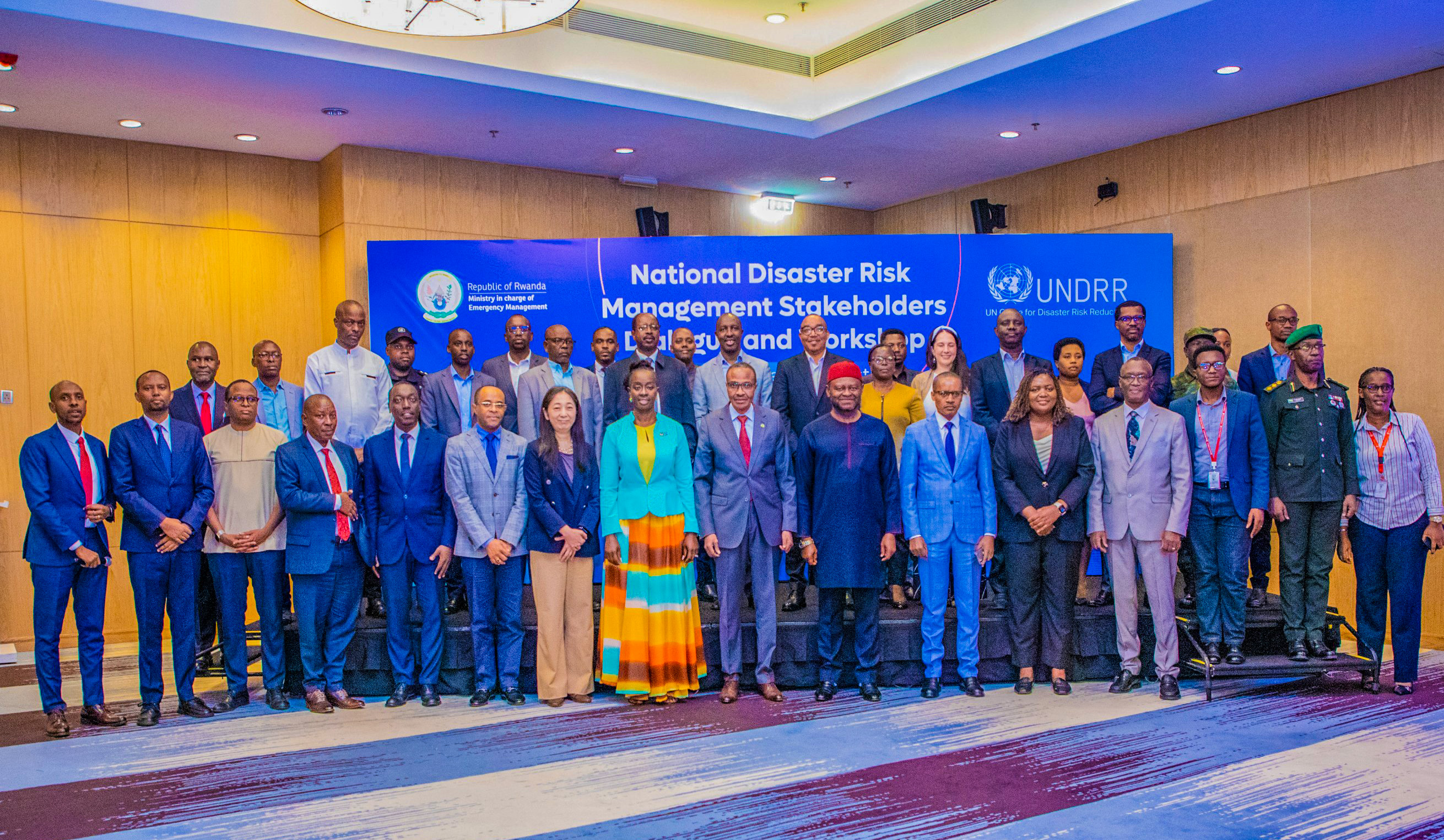
The Ministry in charge of Emergency Management (MINEMA) convened the National Disaster Risk Management Stakeholders’ Dialogue and Workshop as part of activities marking the International Day for Disaster Risk Reduction (IDDRR), celebrated globally every 13 October. This year’s event brought together government institutions, development partners, private sector actors, civil society, and academia to collectively reflect on strengthening Rwanda’s resilience to disasters.
Held under the global theme “Fund Resilience, Not Disasters,” the dialogue focused on the economic and development benefits of investing in disaster risk reduction (DRR). Participants examined how improved financing, planning, and coordination can reduce vulnerabilities, protect livelihoods, and foster sustainable development.

In his opening remarks, Minister of Emergency Management, Hon. Maj. Gen. (Rtd) Albert Murasira, underscored Rwanda’s unwavering commitment to advancing disaster preparedness and resilience-building. He emphasized that shifting from reactive responses to proactive investment in risk reduction is not only cost-effective but also a moral and developmental obligation.
“This year’s theme is a powerful call to action,” Minister MURASIRA said. “We must prioritize funding resilience before disasters strike. Preventing loss is smarter, and far more affordable, than responding after tragedy.”
The Minister highlighted the alignment of Rwanda’s efforts with key national and international frameworks, including the Sendai Framework for Disaster Risk Reduction (2015–2030), the National Strategy for Transformation (NST2), and the Green Growth and Climate Resilience Strategy. These frameworks collectively guide the country toward resilient development that reduces disaster risk while safeguarding communities.
Throughout the workshop, experts and stakeholders discussed emerging risks, climate-related hazards, financing models for DRR, and opportunities for cross-sector collaboration. Participants also reaffirmed their shared responsibility in strengthening early warning systems, building community preparedness, and integrating DRR into development planning.
The event concluded with a renewed commitment to ensuring that resilience remains at the center of national development, reflecting Rwanda’s broader vision of a safer, more sustainable, and disaster-ready future.
Rwanda Calls to “Fund Resilience, Not Disasters” at National DRR Stakeholders’ Dialogue
The Ministry in charge of Emergency Management (MINEMA) convened the National Disaster Risk Management Stakeholders’ Dialogue and Workshop as part of activities marking the International Day for Disaster Risk Reduction (IDDRR), celebrated globally every 13 October. This year’s event brought together government institutions, development partners, private sector actors, civil society, and academia to collectively reflect on strengthening Rwanda’s resilience to disasters.
Held under the global theme “Fund Resilience, Not Disasters,” the dialogue focused on the economic and development benefits of investing in disaster risk reduction (DRR). Participants examined how improved financing, planning, and coordination can reduce vulnerabilities, protect livelihoods, and foster sustainable development.
In his opening remarks, Minister of Emergency Management, Hon. Maj. Gen. (Rtd) Albert Murasira, underscored Rwanda’s unwavering commitment to advancing disaster preparedness and resilience-building. He emphasized that shifting from reactive responses to proactive investment in risk reduction is not only cost-effective but also a moral and developmental obligation.
“This year’s theme is a powerful call to action,” Minister MURASIRA said. “We must prioritize funding resilience before disasters strike. Preventing loss is smarter, and far more affordable, than responding after tragedy.”
The Minister highlighted the alignment of Rwanda’s efforts with key national and international frameworks, including the Sendai Framework for Disaster Risk Reduction (2015–2030), the National Strategy for Transformation (NST2), and the Green Growth and Climate Resilience Strategy. These frameworks collectively guide the country toward resilient development that reduces disaster risk while safeguarding communities.
Throughout the workshop, experts and stakeholders discussed emerging risks, climate-related hazards, financing models for DRR, and opportunities for cross-sector collaboration. Participants also reaffirmed their shared responsibility in strengthening early warning systems, building community preparedness, and integrating DRR into development planning.
The event concluded with a renewed commitment to ensuring that resilience remains at the center of national development, reflecting Rwanda’s broader vision of a safer, more sustainable, and disaster-ready future.