Newsroom
Rwanda Showcases Leadership and Innovation at the 2025 Global Refugee Forum
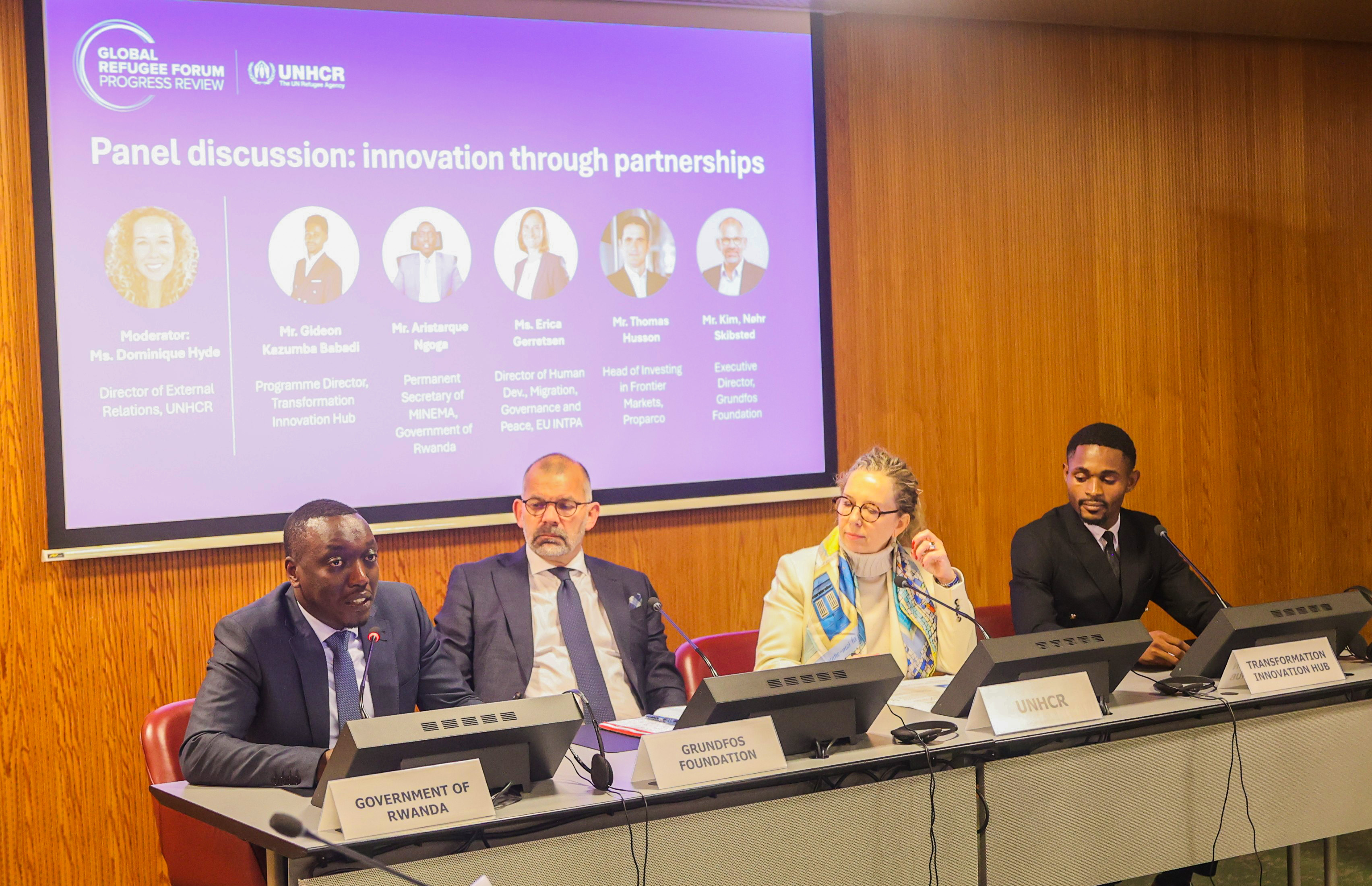
From 15 to 17 December 2025, Rwanda reaffirmed its leadership in progressive and sustainable refugee response at the Global Refugee Forum (GRF) Progress Review in Geneva, convened by the UN Refugee Agency (UNHCR). Rwanda was represented by the Permanent Secretary, Mr. NGOGA Aristarque, who actively contributed to high-level discussions on refugee financing, sustainable human settlements, and national leadership for durable solutions.
The Global Refugee Forum is the principal international platform for reviewing progress on the Global Compact on Refugees (GCR), mobilizing political commitment, and strengthening solidarity with refugees and host countries. The 2025 Progress Review placed particular emphasis on expanding support to refugee-hosting countries, accelerating implementation of pledges, and directing collective efforts toward areas facing urgent needs.
During the General Debate, PS NGOGA highlighted Rwanda’s refugee response model anchored in inclusion, self-reliance, and sustainable development. Drawing on Rwanda’s long-standing experience as a refugee-hosting country, he underscored government-led policies that bridge humanitarian and development efforts while delivering shared benefits for refugees and host communities.

“Rwanda believes that refugee protection must go hand in hand with inclusion, self-reliance, and sustainable development. Through our Refugee Graduation Strategy, we aim to transition at least 50 percent of refugee households from aid dependency by 2030, but this requires predictable financing and renewed international solidarity,” he stated.
On the opening day of the Forum, PS NGOGA spoke on the panel “Rethinking Refugee Finance: Innovation in an Era of Mounting Pressures.” Against a backdrop of rising global displacement and constrained humanitarian resources, he emphasized Rwanda’s experience in advancing partnership-driven and innovative refugee financing models. He highlighted the importance of aligning humanitarian assistance with development investment through collaboration among governments, development partners, the private sector, and humanitarian actors to strengthen refugee self-reliance and benefit host communities.
On day two, PS NGOGA spoke on “Sustainable Human Settlements,” reaffirming Rwanda’s vision to move beyond traditional camps toward integrated, development-oriented settlements. Hosting nearly 138,000 refugees with access to education, healthcare, and livelihoods, Rwanda is progressively transforming refugee areas into development-oriented settlements aligned with the Global Compact on Refugees.

On day three, PS NGOGA spoke on the panel “National Leadership for Advancing Sustainable Responses,” highlighting Rwanda’s experience with government-led refugee responses embedded within national systems and development priorities. Central to this approach is Rwanda’s Five-Year Refugee Graduation Strategy, which aims to transition 50 percent of eligible refugee households from aid dependency to self-reliance. Implemented through partnerships with UNHCR, the World Bank, the European Union, and other development actors, the strategy promotes livelihoods, skills development, financial inclusion, and market access while aligning with national development frameworks.
The Forum also reinforced the urgency of renewed international solidarity. UN High Commissioner for Refugees, Filippo GRANDI, emphasized that solidarity must translate into concrete financial, technical, and political support if the Global Compact on Refugees is to deliver on its promise; an appeal that strongly resonates with Rwanda’s approach to responsibility-sharing.
Concluding Rwanda’s engagement at the Forum, PS Ngoga noted: “Refugee self-reliance is not an abstract aspiration but a deliberate policy choice; one that requires investment, inclusion, and trust in refugees as contributors to society.”
Rwanda’s interventions at the 2025 Global Refugee Forum demonstrated that with strong national leadership, inclusive policies, and coordinated partnerships, refugee responses can evolve from humanitarian assistance into sustainable, development-oriented solutions; benefiting both refugees and host communities while advancing shared prosperity and resilience.
Rwanda Showcases Leadership and Innovation at the 2025 Global Refugee Forum
From 15 to 17 December 2025, Rwanda reaffirmed its leadership in progressive and sustainable refugee response at the Global Refugee Forum (GRF) Progress Review in Geneva, convened by the UN Refugee Agency (UNHCR). Rwanda was represented by the Permanent Secretary, Mr. NGOGA Aristarque, who actively contributed to high-level discussions on refugee financing, sustainable human settlements, and national leadership for durable solutions.
The Global Refugee Forum is the principal international platform for reviewing progress on the Global Compact on Refugees (GCR), mobilizing political commitment, and strengthening solidarity with refugees and host countries. The 2025 Progress Review placed particular emphasis on expanding support to refugee-hosting countries, accelerating implementation of pledges, and directing collective efforts toward areas facing urgent needs.
During the General Debate, PS NGOGA highlighted Rwanda’s refugee response model anchored in inclusion, self-reliance, and sustainable development. Drawing on Rwanda’s long-standing experience as a refugee-hosting country, he underscored government-led policies that bridge humanitarian and development efforts while delivering shared benefits for refugees and host communities.
“Rwanda believes that refugee protection must go hand in hand with inclusion, self-reliance, and sustainable development. Through our Refugee Graduation Strategy, we aim to transition at least 50 percent of refugee households from aid dependency by 2030, but this requires predictable financing and renewed international solidarity,” he stated.
On the opening day of the Forum, PS NGOGA spoke on the panel “Rethinking Refugee Finance: Innovation in an Era of Mounting Pressures.” Against a backdrop of rising global displacement and constrained humanitarian resources, he emphasized Rwanda’s experience in advancing partnership-driven and innovative refugee financing models. He highlighted the importance of aligning humanitarian assistance with development investment through collaboration among governments, development partners, the private sector, and humanitarian actors to strengthen refugee self-reliance and benefit host communities.
On day two, PS NGOGA spoke on “Sustainable Human Settlements,” reaffirming Rwanda’s vision to move beyond traditional camps toward integrated, development-oriented settlements. Hosting nearly 138,000 refugees with access to education, healthcare, and livelihoods, Rwanda is progressively transforming refugee areas into development-oriented settlements aligned with the Global Compact on Refugees.
On day three, PS NGOGA spoke on the panel “National Leadership for Advancing Sustainable Responses,” highlighting Rwanda’s experience with government-led refugee responses embedded within national systems and development priorities. Central to this approach is Rwanda’s Five-Year Refugee Graduation Strategy, which aims to transition 50 percent of eligible refugee households from aid dependency to self-reliance. Implemented through partnerships with UNHCR, the World Bank, the European Union, and other development actors, the strategy promotes livelihoods, skills development, financial inclusion, and market access while aligning with national development frameworks.
The Forum also reinforced the urgency of renewed international solidarity. UN High Commissioner for Refugees, Filippo GRANDI, emphasized that solidarity must translate into concrete financial, technical, and political support if the Global Compact on Refugees is to deliver on its promise; an appeal that strongly resonates with Rwanda’s approach to responsibility-sharing.
Concluding Rwanda’s engagement at the Forum, PS Ngoga noted: “Refugee self-reliance is not an abstract aspiration but a deliberate policy choice; one that requires investment, inclusion, and trust in refugees as contributors to society.”
Rwanda’s interventions at the 2025 Global Refugee Forum demonstrated that with strong national leadership, inclusive policies, and coordinated partnerships, refugee responses can evolve from humanitarian assistance into sustainable, development-oriented solutions; benefiting both refugees and host communities while advancing shared prosperity and resilience.