Rwanda Strengthens Efforts to Promote Refugee Inclusion Through Private Sector Engagement

On June 4, 2026, the MINEMA in collaboration with its partners, convened a Public-Private Dialogue on Refugee Inclusion in Rwanda. The event brought together representatives from government institutions, development partners, humanitarian organizations, financial institutions, refugee-led organizations, and private sector actors to explore sustainable pathways for refugee economic inclusion and self-reliance.
The dialogue provided a platform for stakeholders to discuss innovative approaches and strategic partnerships that can enhance livelihood opportunities, expand access to financial services, and support the implementation of Rwanda’s Refugee Sustainable Graduation Strategy (2025–2030).
The dialogue comes at a time when humanitarian funding is facing significant constraints globally, underscoring the need for innovative and sustainable approaches that empower refugees to become economically independent while contributing to national development. Discussions focused on strengthening partnerships that can expand livelihood opportunities, improve access to financial services, enhance skills development, and create pathways to employment and entrepreneurship for refugees.
In his opening remarks, Permanent Secretary in MINEMA, Mr. Aristarque NGOGA, emphasized that refugee inclusion is not only a humanitarian responsibility but also a development opportunity that requires collective action.
“As humanitarian resources continue to decline worldwide; we must accelerate the transition from aid dependency to sustainable self-reliance. Refugees possess skills, talents, and aspirations that can contribute significantly to local economies when provided with the right opportunities. This dialogue is an important step toward mobilizing partnerships and investments that will enable refugees to become active contributors to Rwanda’s socio-economic development,” said PS Ngoga.

The Permanent Secretary highlighted the Government of Rwanda’s commitment to implementing the Refugee Sustainable Graduation Strategy (2025–2030), which aims to support 50 percent of camp-based refugee households; approximately 14,403 households, to graduate from humanitarian assistance to self-reliance by 2030. The strategy focuses on livelihood promotion, vocational skills development, financial inclusion, social empowerment, and resilience building.
Participants also discussed the critical role of the private sector in supporting refugee inclusion through investments, job creation, entrepreneurship development, market linkages, innovation, and public-private partnerships. Stakeholders noted that sustainable refugee solutions require a whole-of-society approach that leverages the comparative advantages of government, humanitarian actors, development partners, and businesses.
Speaking at the event, Ms. Ritu Shroff, UNHCR Country Representative in Rwanda, commended Rwanda’s progressive refugee inclusion policies and stressed the importance of expanding economic opportunities for refugees through stronger engagement with the private sector.
“Rwanda continues to demonstrate global leadership in advancing refugee inclusion. The Refugee Sustainable Graduation Strategy provides a practical framework for enabling refugees to build resilient livelihoods and reduce dependency on humanitarian assistance. Achieving these ambitions will require strong partnerships with the private sector to unlock jobs, investments, innovation, and financial services that benefit both refugees and host communities,” said Ms. Shroff.

The dialogue concluded with a shared commitment among participants to deepen collaboration and translate discussions into concrete actions that support refugee graduation and economic empowerment. Stakeholders agreed that fostering refugee self-reliance not only improves the well-being of refugee households but also contributes to local economic growth, social cohesion, and Rwanda’s broader development objectives.
The Public-Private Dialogue forms part of ongoing efforts to operationalize the Refugee Sustainable Graduation Strategy and strengthen partnerships that will help refugees live with dignity, independence, and meaningful economic participation while contributing to the prosperity of their host communities.
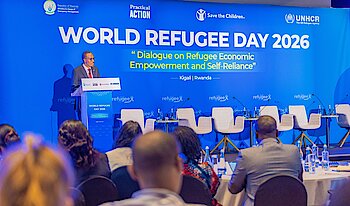
Rwanda Marks World Refugee Day 2026 with Dialogue on Refugee Economic Empowerment and Self-Reliance
On June 30, 2026, the Ministry in Charge of Emergency Management (MINEMA), in collaboration with UNHCR Rwanda, convened a high-level Dialogue on…
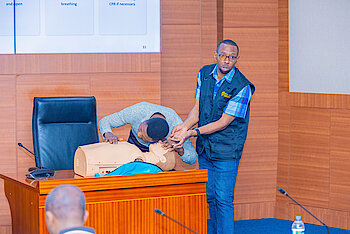
MINEMA Strengthens Staff Capacity Through Workplace Wellness Training
The Ministry in Charge of Emergency Management (MINEMA) today conducted a Workplace Wellness training for its staff to strengthen institutional…
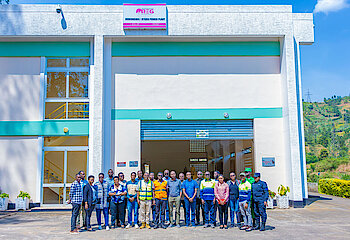
MINEMA Conducts Multi-Agency Simulation Exercise to Test Emergency Response at Mukungwa I Hydropower Plant
The MINEMA, in partnership with Save the Children International, successfully concluded a three-day Tabletop Simulation Exercise aimed at…
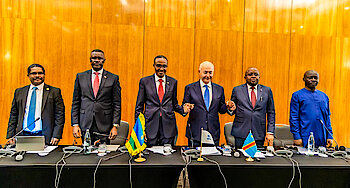
Rwanda Reaffirms Commitment to Durable Refugee Solutions at Tripartite High-Level Meeting in Addis Ababa
Addis Ababa – June 22, 2026: On behalf of the Republic of Rwanda, the Minister in Charge of Emergency Management, Maj. Gen. (Rtd) Albert Murasira,…
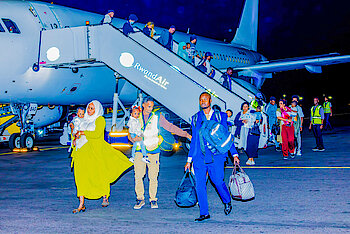
Rwanda Receives 173 More Asylum Seekers Evacuated from Libya Under the Emergency Transit Mechanism
On June 17, 2026, the Government of Rwanda, through the Ministry in Charge of Emergency Management (MINEMA), in partnership with UNHCR Rwanda,…

African Union Humanitarian Assessment Mission Commends Rwanda’s Efforts in Disaster Resilience and Humanitarian Action
A delegation from the African Union (AU) Humanitarian Assessment Mission has concluded a four-day visit to Rwanda, commending the country's…

Minister Murasira Inspects Progress of Housing Construction for Disaster-Affected Families in Rubavu District
The Minister in Charge of Emergency Management, Maj. Gen. (Rtd) Albert Murasira, accompanied by Western Province Governor Jean Bosco Ntibitura and…

MINEMA and WFP Strengthen District Disaster Coordination Through Command Post Training
On June 8, 2026, the MINEMA in partnership with the World Food Programme (WFP), launched a week-long training programme for members of District…

National Platform for Disaster Management Reviews Impacts of Itumba Rainy Season and Recovery Priorities
On 3 June 2026, PS Aristarque NGOGA, chaired a meeting of the National Platform for Disaster Management (NPDM), a multi-sectoral coordination…